

If it’s the best kept secret, education leaders across the nation are running a full-court blitz to change that.
If you haven’t heard of the Federal Scholarship Tax Credit, anyone who wants additional educational resources for kids will want to learn more.
The FSTC allows taxpayers to direct a credit up to $1,700 off their 2027 taxes for a donation that is made to a recognized Scholarship Granting Organization (SGO). This donation would in turn be used by the SGO to provide financial assistance for the educational needs of public and private school students from kindergarten through 12th grade, which in turn could be used in a broad list of areas including tuition, before- and after-school activities, tutoring, special needs and supplies/technology.

One necessary requirement regarding whether or not the students of Delaware or Maryland would have the opportunity to receive this financial assistance is that the governor, or a designee provided by law, opt-in to this federal program.
The two governors who represent people in the Diocese of Wilmington – Delaware’s Matt Meyer and Maryland’s Wes Moore – have not yet chosen to opt-in to the program, which is necessary for people in those states to take advantage of the extra resources it would provide. Bishop William E. Koenig has met with both governors, encouraging them to sign on before the Jan. 1 deadline.
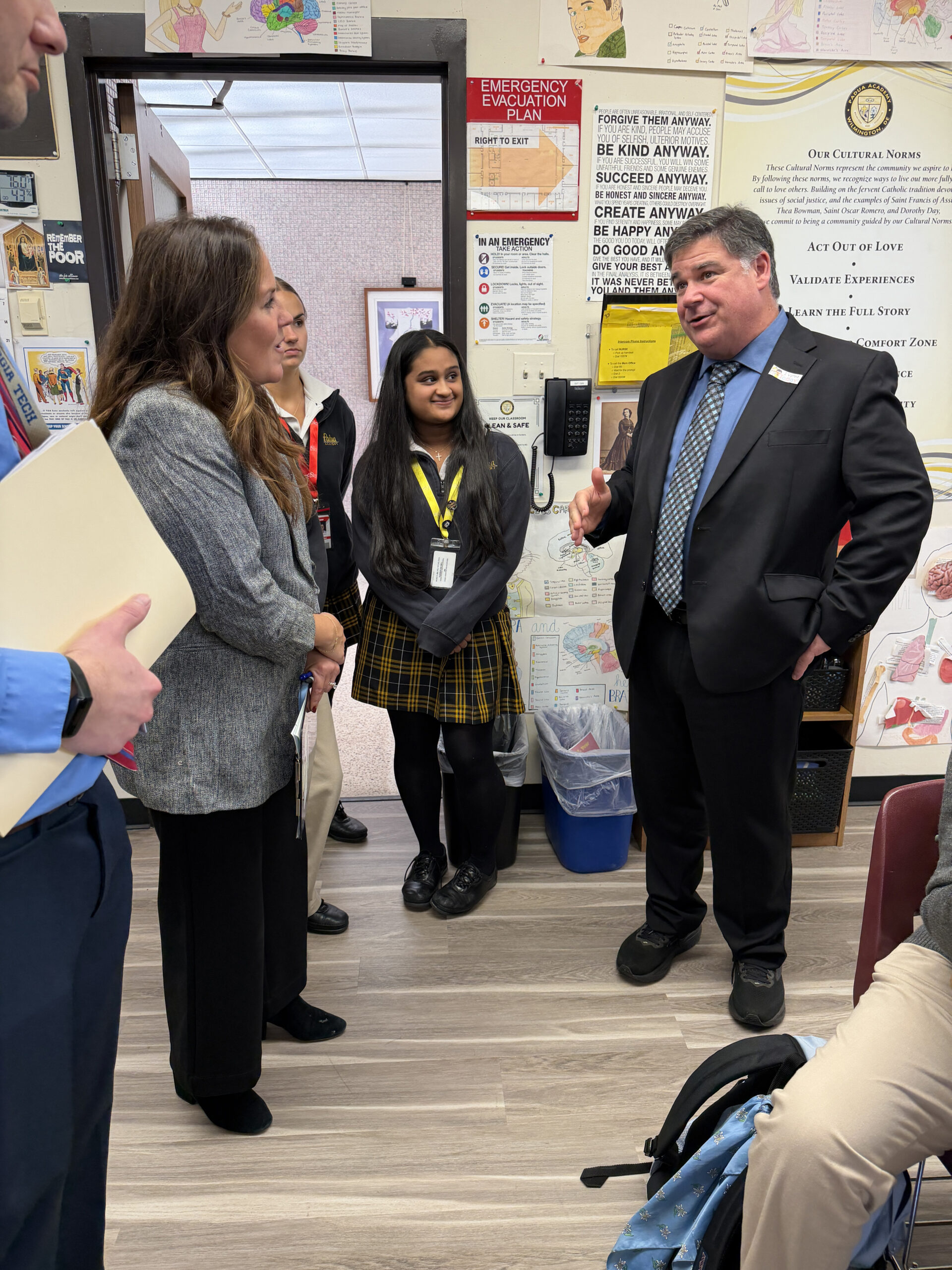
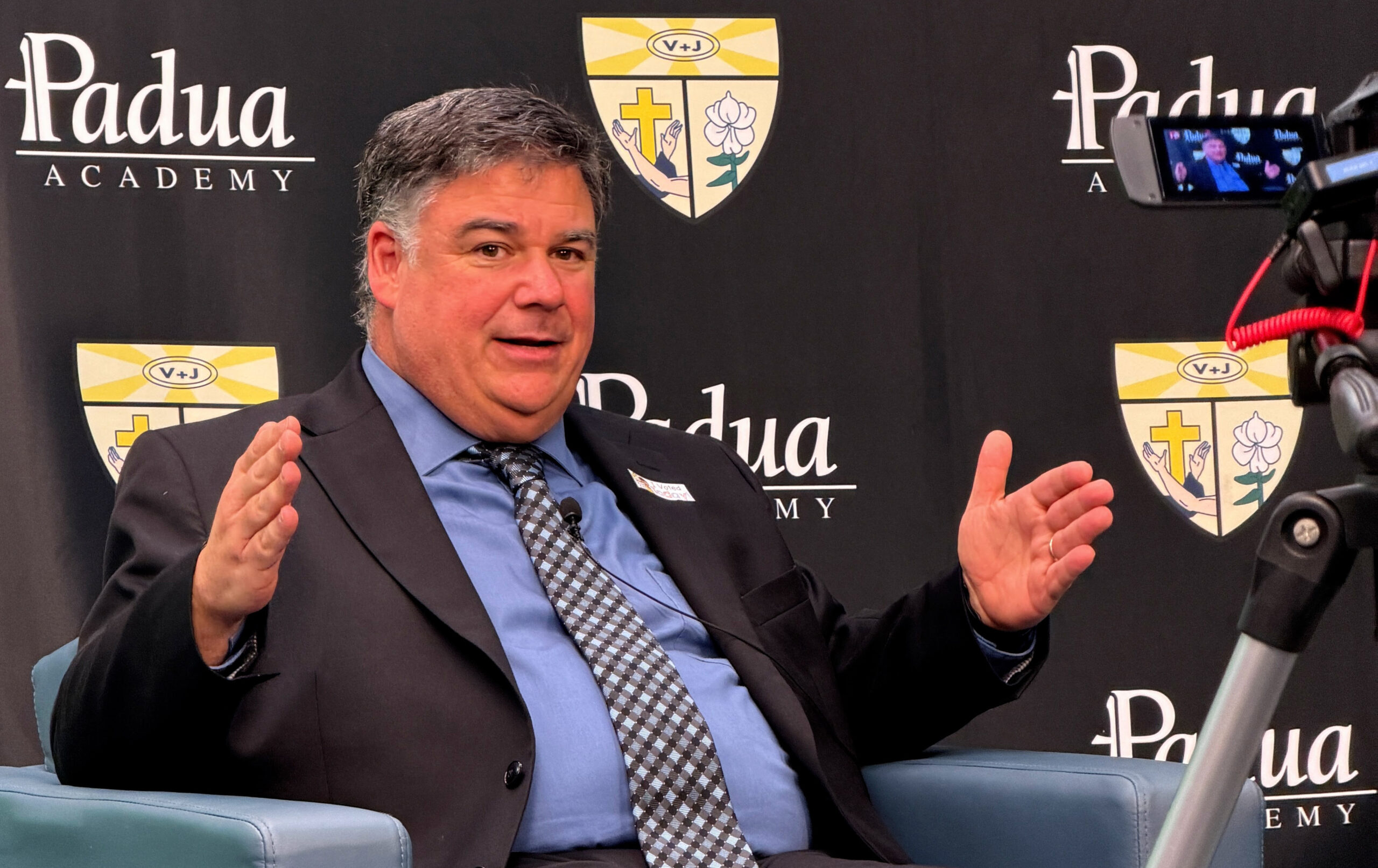
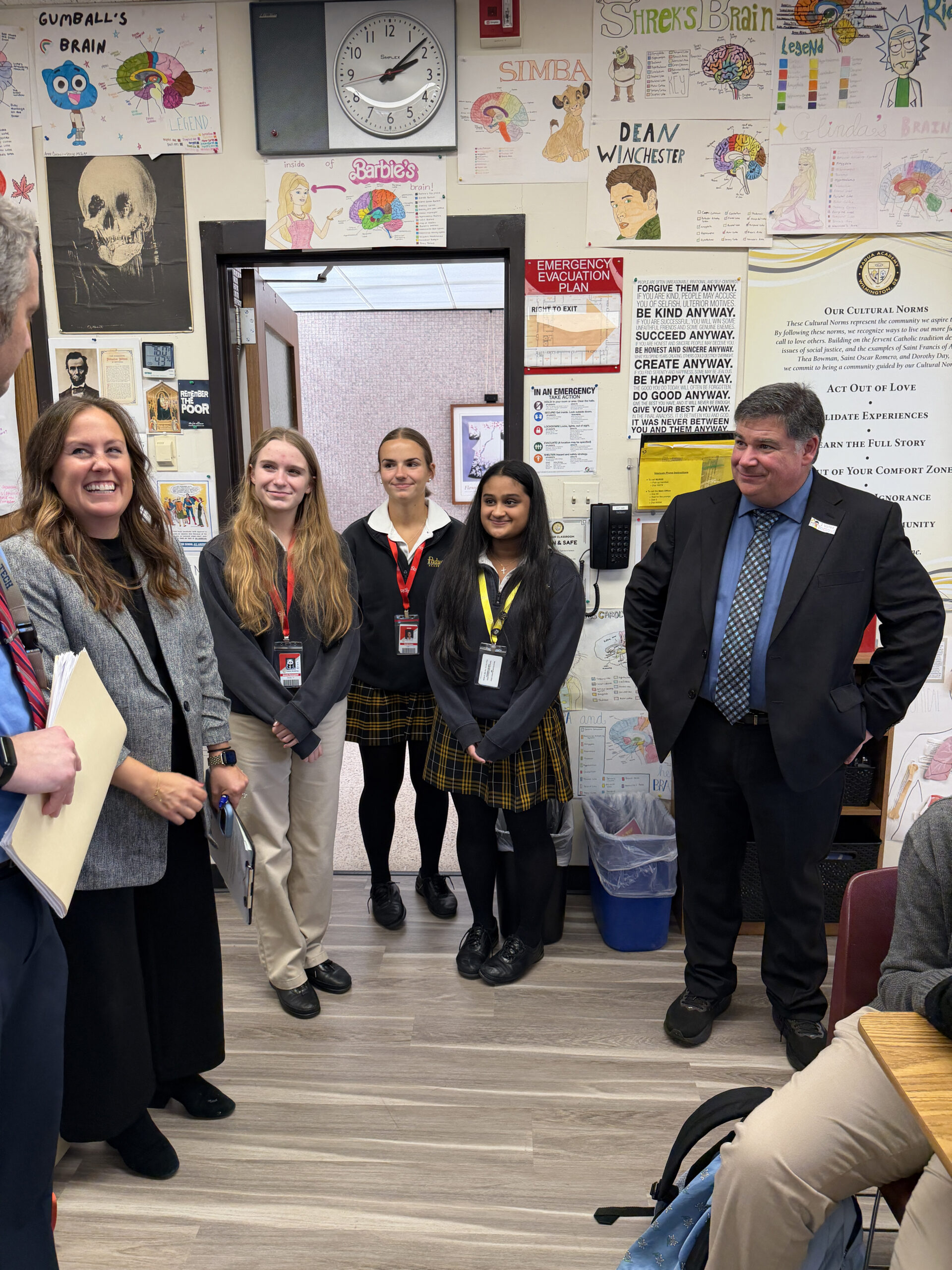
“To me, this is a no-brainer,” said Steve Cheeseman, president and CEO of the National Catholic Educational Association. Cheeseman spent time in Wilmington in early November visiting schools in the diocese and trying to spread the message of this landmark educational resource opportunity.
The legislation passed through Congress last year and takes effect beginning Jan. 1 for states that opt-in. Cheeseman emphasizes the funding mechanism is not just for Catholic school students.
“Contrary to what many people might say, this is not about school choice,” Cheeseman said in an interview with The Dialog that was shared with the Catholic Forum podcast. “It’s not about public schools vs. private schools. This is about giving every child increased opportunity to succeed in school.”
Cheeseman represents the largest private educational association in the world. Members include 6,000 schools, 160,000 educators and 1.7 million students across the U.S.
“Our basic function is to support those in evangelizing the mission of the church through the ministry of Catholic education. Our hope is to be the voice for Catholic schools, and voice of Catholic schools.”
Because the initiative was part of President Donald Trump’s “big, beautiful bill” last summer, Cheeseman is working to keep the issue away from politics, hoping to convince opponents of the president not to oppose it on the basis of it being part of his legislation.
“Everyone should be talking about the opportunity to provide additional resources to students,” Cheeseman said after finishing a tour of the all-girls high school Padua Academy in Wilmington. “Politics gets in the way, but this should not be a political issue. The reality is this is about providing resources to kids.”
Opposition to the initiative comes mostly from labor unions, but their arguments are limited to the idea that only public schools should get public money. The tax credit people choose does not reduce resources anywhere and is available to everyone, Cheeseman said. The tax credit made it through the political process thus far due to hard work by many people who would like to see kids have as many resources as possible, he said.
“It’s been a long time in the making,” he said. “It gives people the opportunity to make a donation that is a tax credit. It’s an opportunity to help kids. You don’t have to leave public school to get these resources. This is not a political issue, it’s about giving kids tools.
“Most teachers support it. Teachers, union and non-union, support the tax credit.
It includes all kinds of resources. It’s a long list of eligible supports, a whole host of resources.”
“I (worked) in public schools for a number of years,” Cheeseman said. “There are great teachers in public schools and great families. I came across numerous families that would have benefitted tremendously from something like this, to be able to get these extra resources that they couldn’t afford.”
He said taxpayers will lose out on the opportunity to receive additional resources for their children if governors don’t sign on.
“Anyone who cares about children and cares about education should care about governors saying ‘yes’ to this,” he said. “Without it, it’s just about missing out on another support for education. It just leaves kids without an opportunity.”
It would also open Catholic schools as an option for families that cannot currently afford it, he said.
“This could be a game-changer for Catholic schools, especially those in an urban setting.
Catholic schools make a tremendous impact. And there are lots of kids in public schools — who need additional resources and supports — who this can help. There’s only a downside to missing out.
“I live in Connecticut, which has not opted in yet, although I hope they do,” Cheeseman said.
“If they don’t, I’m going to be sending my check somewhere. It’s a shame that it won’t help a student in my own state and my own diocese. But it will help a student somewhere else.
“The best thing is to consistently remind governors that this is what this could mean and this is why we want you to say yes to this. If your governor doesn’t opt-in, it’s up to us to help people know how much money left that state because the governor said no. They’re going to have to answer.”
Cheeseman has no way to predict how it will work out here or elsewhere, although at least 30 states have already joined in.
“Politics is hard to predict,” he said. “I believe many of the states that have not opted in, will opt-in. Most of the important questions about transparency, how to prevent fraud, what the eligible uses are and how this will work, most of them have been answered enough that people can make an educated decision. I do believe over the next month, most states will have opted in, although I would guess there will be some holdouts.”
He’d like this issue to become the worst-kept secret or no secret at all.
“One of the things that has really surprised me is how many people don’t know about this and can’t have enough information to make an argument for or against. I would encourage bishops and pastors to talk about this. The more people hear it, in very simple terms and exactly how it works, I think you’ll see a much more unified and clarified message about what this opportunity is.”
Call Matt Meyer, Delaware: 302-577-3210, email link at governor.delaware.gov; Wes Moore, Maryland: 410-974-3901, email link at md.accessgov.com.
States must opt-in by Dec. 31 for all students to get access to this funding. Additional details can be found HERE and HERE.

duniapermainan.id